 alsinantransport@gmail.com
 Office C-72, Saeed Bin Jumaa Bin Saeed Al Hinai Building, Al Nahda 2, Deira, Dubai - United Arab Emirates


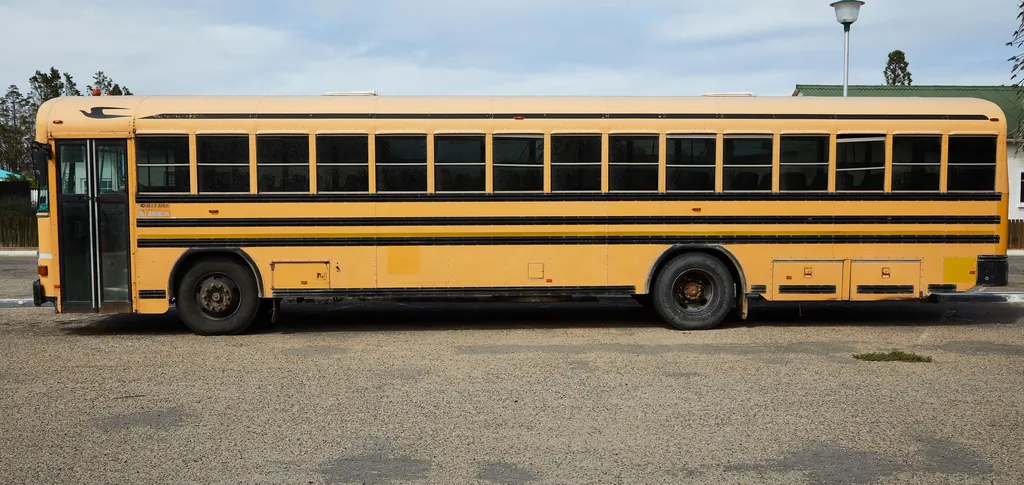
A school run is judged on one thing: whether it is the same every single day. Parents notice a route that works exactly once, on the morning it does not. Schools notice it when the office starts fielding calls at eight.
Whether you are a school appointing a provider or a parent being offered a seat on one, the questions worth asking are mostly the same. They are about how the route is planned and who is accountable, not about the bus.
Licensing comes first
Commercial passenger transport in Dubai is regulated, and carrying students is the part of it with the least room for interpretation. Ask the provider to confirm that the vehicles and the drivers are licensed for passenger transport, and that the insurance covers passengers rather than the vehicle alone.
A provider who answers this immediately and in writing has had the conversation before. One who treats it as an unusual question has told you something useful.
Ask how drivers are screened and trained
Holding a licence is the minimum, not the standard. For school work the relevant questions are about screening and about experience with students:
- What background screening is done before a driver is assigned to a school route.
- Whether drivers have handled student routes before, and for what ages.
- Who supervises boarding and drop off, and whether that is the driver alone.
- What a driver is told to do when a child is not at the stop.
That last one is the question most worth asking. Every provider has a safety policy. Fewer have a clear answer for the ordinary Tuesday when a child simply is not there.
Look at how the route is planned
A good school route is built backwards from the school timings, using the areas families actually live in and the traffic those roads carry at that hour. A weak one is built forwards from the vehicles the provider happens to have free.
The difference shows in the questions you are asked. A provider planning your route will want the school start and finish times, the areas, the number of children and whether any timings differ by year group. One who quotes before asking has priced a guess.
Ask how many stops the route will have and how long the whole run takes end to end. A child who is first on and last off is living with that number every morning.
Check what happens when things change
Term time is not static. Children join and leave, finish times shift for activities, and a family moves across town in March. The question is whether those changes are absorbed into the existing route or treated as a new negotiation each time.
Ask how much notice is needed for a change, who to tell, and whether a mid term addition means the whole route is re planned. A provider running a stable route can usually fold a new stop in. One running at capacity cannot, and it is better to know which you are dealing with.
Find out who you actually call
On the day something goes wrong, the useful thing is not a policy document. It is a person who answers.
Ask for a named contact for daily operations, and ask what the route is when that person is unavailable. For a school, that contact should know your timings without looking them up. For a parent, it should be clear whether an issue goes to the school office or to the transport provider, because a morning spent finding out is a morning wasted.
Ask about driver continuity
Children settle into a route faster when the person driving it does not change every week. It also makes the operation easier: a driver who has run the route for a term knows the stops, the families and the timings without being briefed.
It is reasonable to ask how a provider handles driver absence and whether a replacement is briefed on the route before taking it over.
Understand what the quote covers
There is no standard rate for a school route, because no two are the same. What a quote reflects is the number of children, how far the route runs, how many stops it takes in, the timings it has to meet, the size of vehicle and how long the arrangement lasts.
When comparing providers, give each of them the same details so the answers mean something. The same logic applies on the corporate side, which we set out in what affects the cost of staff transport in Dubai.
Questions for parents specifically
- Where exactly is the pickup point, and at what time.
- How much the time can vary before it counts as late.
- Who supervises the child between the door and the seat.
- What happens on a day the child is not travelling, and who to tell.
- Who to contact first if the bus has not arrived.
Families weighing a school seat against arranging their own transport may find our piece on why families prefer dedicated transport in Dubai useful alongside this.
Talk to us about your route
Tell us the school, the pickup areas, the number of children and the timings, and we will plan the route and come back with a free quote. Our school transport in Dubai service covers daily routes, and our bus rental in Dubai covers trips and events booked separately from the daily run.
Call +971 55 525 2397 WhatsApp Us
Frequently asked questions
What should a school check before appointing a transport provider?
That the vehicles and drivers are licensed for passenger transport, that drivers are screened and trained to work with students, that there is a named contact for daily issues, and that the provider can show how it plans routes around your timings rather than its own.
What should a parent ask about their child's route?
Where the pickup point is and at what time, who supervises boarding and drop off, how the school and the provider are contacted if the bus is late, and what happens on a day the child is not travelling.
How are school routes planned?
Backwards from the school's start and finish times, using the areas families actually live in and the traffic those roads carry at that hour. A route is built once and then left alone, because a school run only works when it is the same every day.
What happens when timings or numbers change mid term?
A new joiner, a changed finish time or an added stop is handled by adjusting the existing route rather than rebuilding it. Tell the provider as early as you can and the change is absorbed into the schedule.